

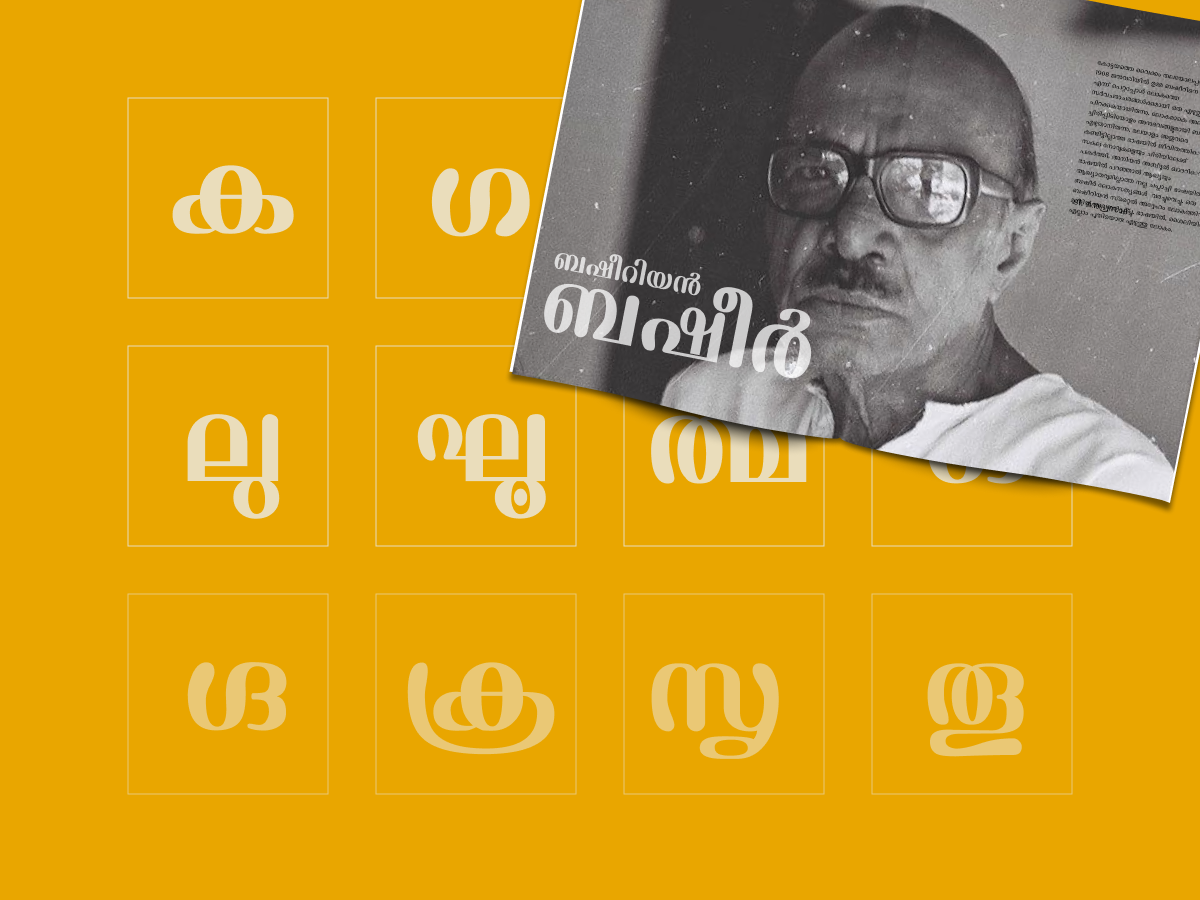
Around 2006, Swathanthra Malayalam Computing was being rebuilt. I was part of SMC through all of this, contributing to bugs, following what others were building, understanding where the gaps were. One gap was decorative fonts. Everything that existed was built for body text, nothing for titles, posters, or covers.
The initial idea was to collaborate with an existing artist who knows Malayalam lettering, have them letter the glyphs by hand, vectorize those, and build a font from it. Rufscript had shown me this workflow could work for English. Malayalam was different though, with 900+ glyphs and more sophisticated strokes that don’t simplify the way Latin letters do. The manual approach couldn’t scale to that.
Hussain was my GSoC mentor and he redirected the approach. He already had some glyphs in progress built around a geometric idea, rounded forms slightly bulged at the ends, loosely inspired by a style that appears on Malayalam book covers and film posters. I took that direction, learned the geometry, talked to artists who had been doing this work long before digital tools existed, and built from there. Dyuthi became the first decorative Unicode font for Malayalam, published under SIL Open Font License and maintained by SMC.